A Day In The Life Of A Community Palliative Care Nurse
Living with multiple sclerosis herself, Emily supports hundreds of patients across North Kent, ensuring their final days are filled with comfort, compassion and care.
Hardly a week goes by without Emily Spencer helping a family say a final goodbye to someone they love. Like all palliative care nurses, she has a unique and important role. She knows she cannot cure her patients, but she can make them comfortable and pain free and smooth the journey – for them and for their loved ones.
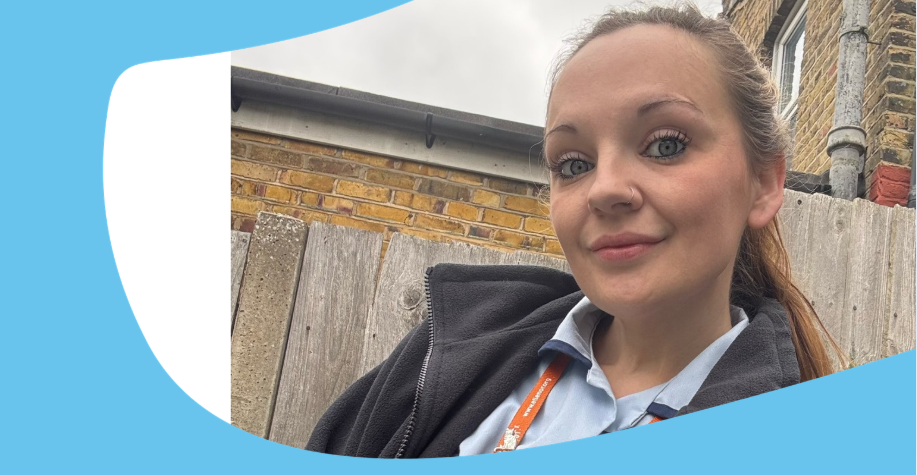
At just 30, Emily always puts her patients first. As a Community Palliative Care Nurse with ellenor, she provides expert end-of-life care in care homes, helping them remain where they feel most comfortable and secure. Around 95% of ellenor’s care is delivered in the community, supporting patients and families with compassionate, specialist care that upholds dignity, comfort, and choice.
Before work:
It’s time for Emily to feed their two dogs and three cats and get her two children Luna, six, and Arlo, five, to school. She lives with husband Aaron just round the corner from the hospice in Northfleet.
She said: “Since I came with my school to sing at Christmas, I have always loved being at ellenor. There are a lot of misconception about hospices, but they are a lot more than a place to die.”
Start of the working day:
“Every morning at 9am I talk to the Hospice at Home Adult community team and on a Wednesday, we always meet face to face at the hospice. Once a month the whole team comes in. We all like to keep in contact. They are the best I have ever worked with; always there to pick me up when I am down, and I do the same for them.
“I have a lovely job. There is nowhere near as much stress as working in a hospital. Our patients are past the point of us being able to save them, but our job is all about making people feel comfortable. We look at things a bit differently, and we know when people are ready to die.”
Daily care home visits:
As part of ellenor’s Care Home Support Team Emily is out and about visiting different nursing and residential homes.
She said: “I review each patient’s medication and make sure their pain is well managed. I also assess whether they need crisis medication and look out for any changes in their condition. My role is really about spotting what extra help ellenor can offer – whether that’s arranging a hospice bed, providing mobility equipment, or fast-tracking referrals for NHS Continuing Healthcare funding. I’m fairly sure ellenor is the only hospice in this area that supports care homes in quite this way.”
Emily works full-time across the area, while her colleague Harvinder covers one day a week. The team also includes three Healthcare Assistants and a Clinical Nurse Specialist who joins them weekly. Together, they support around 15 care homes and more than 550 residents. Emily is personally responsible for 155 of those patients, aiming to visit each of them every month and, she adds, “the team is always at the end of the phone when someone needs us.”
Visiting a patient for the first time:
Emily visits several care homes in one day and makes extra time if she is seeing a patient for the first time.
She said: “It’s important to remember the family and their needs, and we can often refer them for additional support through ellenor, maybe counselling.
“ellenor is very big on the emotional side and my job is to make sure people are happy and settled, all their wishes are being met and that they are not in any pain. I can look straight into people’s faces, and I can tell straight away if there’s something we need to do to help.”
Emily, who has worked at ellenor for two years, started her nursing career in AMU (Acute Medical Unit) at Darent Valley Hospital, but it was later while she was working as a district nurse that she found her true calling.
“I fell in love with palliative care,” she said. It wouldn’t be every nurse’s choice to work with patients who will not recover, but Emily finds joy in relieving physical and emotional pain.
Visiting a patient at end of life:
Adamant that no one at the end of their life should be in pain, Emily is trained to give crisis medication including injections of morphine and oxycodone and is qualified to use a syringe driver. She also knows how important it is to give patients, and their families support and cuddles.
Diagnosed with MS six months ago, following five years of symptoms, Emily is thankful her treatment keeps symptoms at bay. Poignantly, she watched her own grandmother suffer with the disease.
“She didn’t have any palliative care and that meant she didn’t have the best death – it was then that I decided to be a nurse,” said Emily.
“I feel like I’m giving back every day, and I do try to be positive. Whenever I visit a patient, I make sure the staff at the home are doing what they should be doing and that they will recognise the signs and do everything that should be done. I check that a patient has any DNR (Do Not Resuscitate) form they might have in place and that they are comfortable.
“Most of the time you know when someone is almost at the end of their life. I was recently on a visit where two people were passing on the same day and I was able to hold both their hands and have a little talk with them. I opened the window and played some music for them. They just needed someone to say that it was okay.”
End of the day:
When Emily has finished her daily visits, she goes home to write up her notes, deal with phone calls and write to GPs.
She said: “I can send urgent emails about crisis medication and pain relief and will usually get a reply that day. I also do referrals for family members who might need counselling or other support.”
At the end of her working day, Emily is tired but knows her visits have been worthwhile. She finishes in time to pick up Luna and Arlo. If it’s the weekend the family will also welcome Aaron’s three other children into their home. She admits that they lead a very busy life, but she wouldn’t have it any other way.